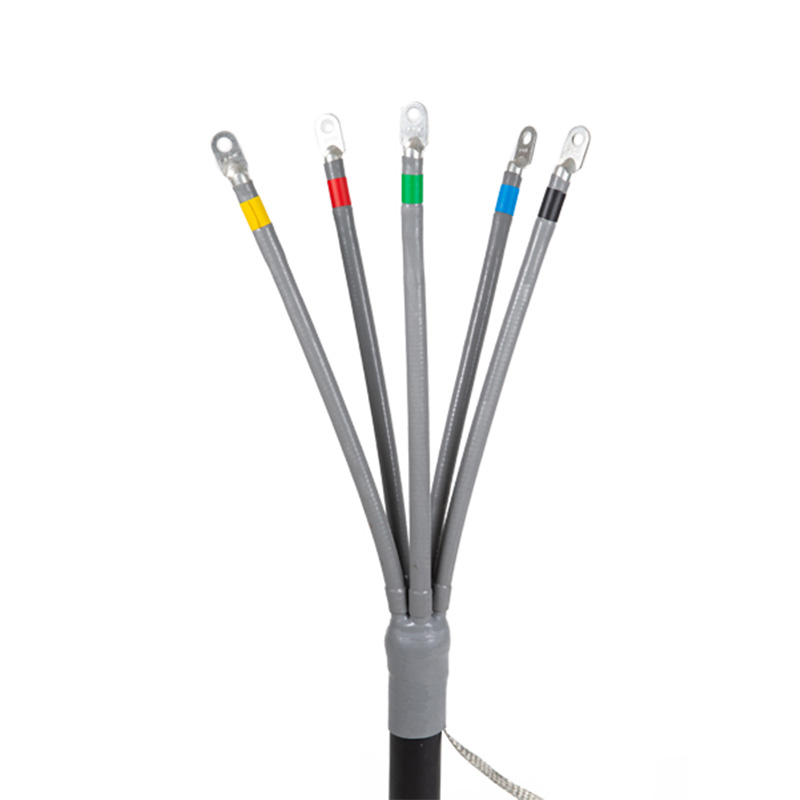
Views: 50 Author: Site Editor Publish Time: 2026-05-11 Origin: Site
Utility power projects place far stricter demands on cable connection components than ordinary installation jobs. Product choice affects installation consistency, sealing stability, outage planning, field handling, and long-term network reliability. When evaluating cold shrink cable accessories, the decision should not be based only on catalog appearance or price, but on how well the product matches voltage class, cable dimensions, environmental exposure, and project delivery conditions.
● Select cold shrink cable accessories by voltage class, cable fit, and operating environment.
● Give equal weight to sealing performance, stress control, and installation consistency.
● Review test documentation, dimensional range, and material stability before purchase.
● Compare suppliers by delivery reliability, technical responsiveness, and product consistency.
● Avoid choosing cold shrink cable accessories on price alone for utility applications.
Utility systems are built around long operating cycles, so accessory selection has to support stable performance over many years rather than short-term installation convenience alone. Cold shrink cable accessories used in these projects must maintain elastic recovery, interface pressure, and environmental sealing through thermal cycling and seasonal temperature change. A product that performs well only under ideal initial installation conditions may not remain dependable once the cable system is exposed to long-term field stress.
The service life requirement also changes the way procurement teams should review specifications. It is not enough to confirm only the voltage rating on the datasheet; the structural design, insulation material, and sealing behavior deserve equal attention. In utility work, cold shrink cable accessories are expected to remain reliable across changing load conditions and varying site exposure.
Many utility installations are exposed to UV, rain, dust, surface contamination, and repeated temperature fluctuations. Under these conditions, cold shrink cable accessories need to resist environmental aging while keeping a stable seal around the cable interface. Material choice therefore becomes a practical buying factor rather than a secondary technical detail.
Outdoor installations also create more variation during field work. Components may be installed in substations, roadside cable routes, or network expansion points where access is limited and conditions are less controlled. Cold shrink cable accessories that are easier to position and less dependent on heat-based recovery generally align better with these realities.
Utility projects often involve multiple crews, multiple sites, and repeated installation sequences over a short schedule window. In this kind of environment, cold shrink cable accessories should deliver repeatable results without excessive dependence on individual installer technique. Products with stable dimensional tolerance and clear installation sequence are usually more suitable for network-scale work.
Consistency matters because variation at the accessory interface can lead to rework, inspection delays, or future service issues. Cold shrink cable accessories that are designed for predictable field recovery reduce avoidable process variation. That makes them more appropriate for projects where installation quality has to remain uniform across locations.
The first screening step is to confirm that cold shrink cable accessories match the voltage class and system design of the intended application. This includes not only nominal voltage but also insulation coordination and the electrical demands placed on the termination or joint. Products that appear similar in general form may still be unsuitable if their design range does not match the operating conditions of the network.
System compatibility should also take cable construction into account. Screen type, insulation material, sheath structure, and conductor size all influence whether cold shrink cable accessories will fit and perform as intended. A careful match at this stage reduces the risk of installation difficulty and interface failure later.
Dimensional fit is one of the most important buying criteria for cold shrink cable accessories because recovery pressure depends on the product matching the actual cable range. If the range is too broad or the cable falls near the limit, sealing and stress control performance may become less predictable. Accurate review of conductor size, insulation diameter, and outer sheath dimensions is therefore essential.
This is especially important in utility upgrades and replacement work where installed cable types may differ from standard assumptions. Procurement decisions should be based on measured or confirmed cable data rather than approximate category matching. Cold shrink cable accessories perform best when the intended cable dimensions are clearly within the validated working range.
Silicone rubber and EPDM are common materials in cold shrink cable accessories, but material naming alone is not enough to judge quality. What matters is how the material performs under compression, thermal exposure, moisture, and long-term aging. In utility environments, the sealing function has to remain stable even when cables experience movement, load-related heating, and environmental contamination.
A strong sealing system also reduces the chance of moisture ingress at critical interfaces. That is particularly important in outdoor terminations and buried or semi-exposed jointing points. When comparing cold shrink cable accessories, material stability should be considered alongside the electrical design rather than as a separate item.
Technical Factor | What to Verify | Why It Matters |
Voltage class | Rated application range | Prevents electrical mismatch |
Cable dimensions | Insulation and sheath fit | Supports correct recovery pressure |
Material type | Aging and weather resistance | Affects sealing durability |
Stress control design | Integrated electrical grading | Reduces interface stress concentration |
Installation range | Product fit tolerance | Improves consistency in field work |
For utility use, purchasing decisions should include a review of available test documentation rather than relying only on general product claims. Cold shrink cable accessories should be supported by relevant type test or routine quality records where applicable. Documentation provides a more reliable basis for comparison than broad statements about performance.
The completeness and clarity of technical documentation also influence project approval and internal review efficiency. In many cases, specification checks move faster when dimensional data, application range, and material information are clearly presented. Cold shrink cable accessories supported by organized documentation are usually easier to evaluate and approve for utility work.
A technically suitable product can still create project problems if supply timing is inconsistent. Utility installations often depend on outage windows, staged construction schedules, or replacement programs that cannot shift easily once confirmed. Cold shrink cable accessories should therefore be reviewed not only as products but also as deliverable components within a fixed project timeline.
Lead time becomes even more important when projects involve repeated accessory types across multiple cable sections. Delays in one item can affect installation sequencing, labor planning, and energization milestones. Reliable supply continuity is a practical buying factor, especially for utility projects that require coordinated execution.
Cold shrink cable accessories are often transported to substations, site stores, or remote field locations before use, so packaging and storage suitability deserve attention. Components should arrive protected from damage, contamination, and unnecessary deformation during handling. A product that reaches the site in poor condition can create avoidable delays even if its technical design is acceptable.
Storage conditions also affect field readiness. Utility projects benefit from cold shrink cable accessories that can be handled, identified, and issued to crews without confusion or excessive preparation. Good packaging discipline supports smoother installation flow across active project locations.
Cold shrink cable accessories are often chosen because they avoid flame-based recovery and simplify the installation sequence. That advantage becomes more meaningful in substations, roadside works, underground transitions, and weather-exposed environments where working conditions are less predictable. Products that are straightforward to position and release generally reduce installation variation.
Field-friendly installation also affects schedule reliability. When crews can complete repeated steps with less dependency on external heating tools or complicated preparation, the overall work sequence becomes more stable. For utility projects, this kind of predictability is often as important as installation speed itself.
Supplier comparison should include how clearly technical questions are answered and how consistently product information is provided. Cold shrink cable accessories are not interchangeable across all cable systems, so dimensional confirmation and application guidance often need to be handled carefully during procurement review. A supplier that responds precisely to specification questions reduces uncertainty before purchase.
Product consistency is equally important. Utility projects may require the same accessory type across multiple locations, and differences between batches can complicate installation control. Cold shrink cable accessories supported by stable manufacturing and repeatable dimensional quality are easier to standardize across the project.
Not every product that works in general industry is equally suitable for utility-style project execution. Utility work often demands stronger attention to documentation, repeatable supply, clear installation scope, and durable environmental performance. Cold shrink cable accessories selected for these conditions should reflect that broader project context.
Experience with similar application patterns can also improve early-stage specification review. It allows product suitability to be assessed with more attention to cable type, exposure condition, and installation sequence. In practical terms, cold shrink cable accessories aligned with utility project requirements tend to reduce downstream clarification and replacement risk.
Supplier Criterion | What Good Looks Like | Risk If Missing |
Technical reply quality | Clear answers on fit and application | Wrong product selection |
Documentation readiness | Complete specs and test records | Slower approval process |
Delivery consistency | Predictable lead time | Schedule disruption |
Batch consistency | Stable dimensions and materials | Field variation and rework |
Project coordination | Organized communication | Procurement uncertainty |
Low unit price can appear attractive during initial comparison, but it rarely reflects the full cost of performance risk, rework, or installation disruption. Cold shrink cable accessories in utility applications need to meet technical and environmental requirements first. A cheaper option that creates fit issues or inconsistent recovery can become more expensive once project delays are considered.
Price should therefore be assessed in relation to performance stability, documentation quality, and delivery reliability. Utility projects usually benefit from a total-evaluation approach rather than a price-only screen. That is particularly true when cold shrink cable accessories are being installed across multiple cable points.
Another common mistake is selecting products by voltage class while giving too little attention to field exposure. Moisture, UV, dust, salt, industrial contamination, and temperature variation can all influence how cold shrink cable accessories perform over time. Environmental suitability should be reviewed as part of the main specification process, not as an afterthought.
Ignoring site conditions can narrow the apparent price gap at purchase but widen the risk gap after installation. Utility installations frequently operate in exposed or uneven conditions where sealing durability matters greatly. Cold shrink cable accessories should be selected with the real service environment in mind from the beginning.
Some buying decisions are made using only general product categories without confirming exact cable dimensions or available records. That approach can create avoidable problems in projects involving mixed cable types, replacements, or existing network upgrades. Cold shrink cable accessories should be matched against actual cable data whenever possible.
Documentation gaps create a second layer of risk. If dimensional range, installation scope, or test information is unclear, project teams may face delays during approval or site preparation. Strong fit confirmation and complete documentation make the procurement process more dependable.
Choosing the right cold shrink cable accessories for utility projects means evaluating far more than basic product appearance or initial price. Voltage compatibility, cable fit, material performance, stress control, documentation quality, delivery stability, and installation consistency all shape whether the selected solution will perform reliably in service. For projects that require a closer review of specifications, application range, and supply coordination, GIHOMO can be considered as a source for cold shrink cable accessories aligned with utility installation requirements.
The product should match the operating voltage and application design of the cable system, not just a broad category label. Cable construction, insulation system, and installation type should also be reviewed together. A correct voltage match is the starting point for reliable accessory selection.
Yes, many cold shrink cable accessories are designed for outdoor use, but performance depends on material quality and environmental suitability. UV exposure, moisture, dust, and contamination should all be considered during selection. Outdoor installation conditions should be reviewed before finalizing the product.
Cold shrink cable accessories rely on proper elastic recovery, so dimensional fit directly affects sealing pressure and interface stability. If the cable falls outside the intended range, installation and long-term performance can both be affected. Accurate cable data is therefore essential during product selection.