Views: 0 Author: Site Editor Publish Time: 2026-09-01 Origin: Site
Specifying the correct transformer rating is a high-stakes balancing act between upfront capital expenditure and long-term operational reliability. You must navigate this careful balance for every project. Oversizing wastes budget on idle energy losses and larger physical footprints. Conversely, undersizing risks catastrophic failure, code violations, and severe facility downtime. We know you need the exact transformer rating for commercial building applications to avoid these daily pitfalls.
This guide breaks down the standard frameworks, necessary calculations, and compliance criteria to finalize your specification. We will clarify standard commercial requirements. You will learn how to align mathematical loads with practical vendor constraints. Finally, we provide the exact steps you need to confidently move to procurement without second-guessing your sizing choices.
Base your kVA specification on a rigorous electrical load calculation, incorporating standard demand factors and continuous load safety margins (e.g., the 125% rule).
Always round up your calculated load to the next standard, commercially available kVA rating to ensure procurement feasibility and adequate transformer capacity.
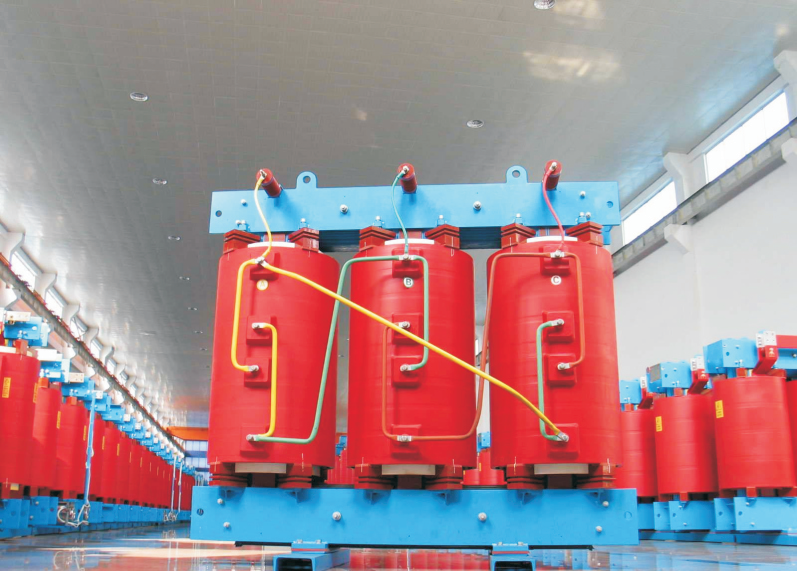
For indoor commercial applications, dry-type transformers are generally the industry standard due to fire safety compliance and reduced maintenance requirements.
Beyond electrical metrics, vendor selection must account for physical footprint, lead times, and DOE 2016 efficiency compliance.
Choosing the correct equipment goes far beyond simple math. The capacity you select dictates how smoothly your facility operates. It also directly impacts your initial capital budget.
Inadequate capacity creates harsh operational realities. When you undersize a unit, it constantly runs near or above its thermal limits. This causes severe overheating in the coils. Overheating leads to accelerated insulation degradation, which shortens equipment life significantly. Furthermore, overloaded units suffer unacceptable voltage drops during peak hours. These voltage drops can damage sensitive servers, lighting systems, and HVAC controls. In extreme cases, undersized units pose severe fire hazards to the entire structure.
Engineers often fall into the trap of excessive future-proofing. They specify massive units just in case the building adds more loads later. Heavy oversizing leads to entirely wasted CapEx. It demands higher physical space requirements in tight electrical rooms. Large units also generate elevated inrush currents when energized. These current spikes frequently trip upstream breakers unexpectedly. Additionally, oversized units suffer from continuous core energy losses. The core draws power even when the building is empty, wasting expensive energy 24/7.
How do we define a successful specification? A successful specification meets current NEC (National Electrical Code) requirements without compromise. It easily accommodates 10-20% planned future expansion. Importantly, it aligns perfectly with standard manufacturing sizes. Selecting standard sizes helps you minimize custom engineering costs and avoid terrible procurement delays.
You cannot guess your facility power requirements. You must base your specification on a strict electrical load calculation. This mathematical foundation prevents costly errors.
First, you must confirm both the primary (supply) and secondary (load) voltages. Commercial buildings usually receive high-voltage utility power. You might need to step down a 480V 3-phase supply to a 208Y/120V system. The 208Y/120V system powers standard wall outlets and office lighting. Mismatched voltages will render your new unit completely useless. Always verify utility supply numbers before doing any math.
We use specific mathematical frameworks to determine basic capacity. You must calculate the apparent power in kilovolt-amps (kVA). Use these industry-standard formulas:
Single-Phase Formula: kVA = (Volts × Amps) / 1,000
Three-Phase Formula: kVA = (Volts × Amps × 1.732) / 1,000
For example, a three-phase system delivering 480V at 100 Amps requires approximately 83 kVA. You simply multiply 480 by 100, then by 1.732, and divide by 1,000.
You must separate your building loads into two distinct categories. First, identify continuous loads. These loads operate constantly for three or more hours. Office lighting and server racks represent typical continuous loads. The NEC mandates a 125% capacity rating for continuous loads to prevent thermal failure. Next, identify non-continuous loads. Breakroom appliances and certain motors fall into this group. They do not require the same aggressive safety margin.
Commercial facilities rely heavily on diversity factors. Not every HVAC unit, lighting circuit, and server rack will draw peak current simultaneously. Demand factors allow you to reduce the total calculated load based on realistic usage patterns. A large office building rarely operates every device at once. Applying proper demand factors keeps your calculations grounded in reality. It directly prevents you from falling into the oversizing trap discussed earlier.
Your mathematical calculations will rarely land on a perfectly round number. You must adjust your final figures to match what manufacturers actually build. This step guarantees viable transformer capacity for your project.
Custom kVA sizes carry extreme price premiums. They also suffer from painfully long lead times. Once you calculate the minimum required kVA, you must round up. Always move to the next standard size. If your calculation dictates 92 kVA, you never order a custom 92 kVA unit. You round up to the nearest standard manufactured rating.
Manufacturers produce specific baseline sizes for the commercial market. Sticking to these sizes ensures competitive pricing. It also guarantees easier replacement if failures occur. Standard kVA ratings include:
15 kVA
30 kVA
45 kVA
75 kVA
112.5 kVA
150 kVA
225 kVA
300 kVA
500 kVA
In our earlier example, we calculated 83 kVA. You would naturally round this up to a standard 112.5 kVA unit.
Building usage evolves over time. Tenants add more computers, stronger cooling, and complex machinery. We recommend an evidence-based guideline for future-proofing. You should leave a 20-25% headroom margin for expected building capacity growth. This specific range accommodates new tenant loads effectively. Crucially, a 25% margin does not push you into the harmful oversizing trap. It represents the perfect middle ground between safety and efficiency.
The physical environment dictates your technology choices. You must decide between dry-type and liquid-filled designs based on location and safety rules. This choice forms the core of successful building transformer selection.
Dry-type transformers serve as the absolute default for indoor commercial spaces. They cool their internal coils using ambient air instead of messy fluids. We focus on them because they offer superior safety profiles. They carry a very low fire risk, which building codes demand for indoor installations. They also ensure strict environmental compliance. You never worry about toxic dielectric fluid leaks ruining your facility. Furthermore, dry-type units provide ease of maintenance. Facility managers simply vacuum the cooling vents periodically.
We specify liquid-filled units for highly specific edge cases. You typically see them in high-capacity outdoor substations. They serve massive industrial parks or expansive commercial campuses. They use mineral oil or synthetic fluids for cooling. This provides superior cooling capability and exceptional longevity under heavy loads. However, they require costly containment infrastructure. If the tank ruptures, you need concrete catch basins to prevent environmental contamination.
Comparison: Dry-Type vs. Liquid-Filled
Feature | Dry-Type | Liquid-Filled |
|---|---|---|
Primary Application | Indoor commercial buildings | Outdoor substations / industrial |
Cooling Medium | Ambient air | Mineral oil or synthetic fluid |
Fire Risk | Very low | Moderate (requires mitigation) |
Maintenance Needs | Minimal (cleaning vents) | High (fluid testing and leak checks) |
Containment Required | None | Concrete catch basins/berms |
You must connect the physical environment to proper NEMA enclosure ratings. The enclosure protects the internal coils from dust, water, and debris. For clean, climate-controlled electrical rooms, NEMA 1 or 2 ratings work perfectly. NEMA 2 provides basic drip-proof protection. If you install the unit outdoors, you must upgrade the enclosure. NEMA 3R represents the standard for outdoor locations. NEMA 3R also protects units placed adjacent to indoor sprinkler systems. It repels falling water and blowing rain effectively.
Your technical specification means nothing if you choose an unreliable vendor. The procurement phase requires rigorous vetting. You must look far beyond basic electrical parameters.
Never purchase uncertified equipment. You must insist on verifying DOE 2016 energy efficiency standards. The Department of Energy mandates these rules to reduce wasted core losses. Modern units must meet strict efficiency targets under partial loads. You also need verified UL listings. Local electrical inspectors look for UL labels before signing off on your project. Finally, verify IEEE/ANSI testing protocols. These protocols prove the unit can survive short circuits and voltage surges.
Commercial real estate heavily prioritizes leasable space. Building owners shrink electrical rooms to maximize rentable square footage. This creates a harsh implementation reality. Your selected unit must physically fit into the designated space. It must also fit through standard doorways and freight elevators during installation. Weight checks remain critical. Older building floors might not support a massive 500 kVA block of iron and copper. Always verify dimensional drawings before issuing a purchase order.
Transformer shortages remain a known bottleneck in modern commercial construction schedules. Buyers must evaluate vendors based on actual inventory availability. Ask vendors for guaranteed delivery timelines in writing. A cheaper unit means nothing if it arrives three months late. Late deliveries stall construction, delay tenant move-ins, and breach contracts. Prioritize suppliers who maintain robust regional stock.
Define standard warranty expectations early in the discussion. A one-year warranty represents the bare minimum. Premium manufacturers often offer extended multi-year coverage. You must also weigh the value of post-sale technical support. Installation troubleshooting can save days of contractor labor. A responsive vendor helps your electricians resolve grounding or vibration issues immediately.
Specifying a transformer requires balancing rigorous mathematical loads with practical procurement realities. You must calculate precise amp draws and apply proper demand factors. You then align those numbers with standard commercial sizes and physical footprint constraints. Do not guess your capacity margins. Avoid the dangers of undersizing and the financial waste of heavy oversizing.
Your next step requires decisive action. We encourage you to review your facility’s single-line diagram with a licensed electrical engineer. Confirm your primary voltages and continuous load requirements. Once you finish your calculations, contact your dedicated sales team. Share your calculated kVA numbers to request an accurate spec sheet and a formal quote.
A: A separate unit becomes necessary when a building's load dramatically exceeds standard utility provisions. You also need one when specialized high-draw tenants move in. Examples include heavy manufacturing tenants or massive data centers. These tenants require specialized isolation or unique step-down voltages that standard street utility feeds cannot provide safely.
A: Yes, but only for short durations. NEC rules dictate strict thermal limits based on load types. Continuous loads—operating for three or more hours—require a 125% capacity rating margin. Pushing a unit to 100% capacity continuously causes extreme heat buildup. This destroys internal coil insulation and risks premature failure.
A: Undersizing creates immediate operational chaos. You will experience constantly tripped breakers due to excessive current draw. Your facility will suffer severe voltage sags, damaging sensitive electronics and computers. Ultimately, the constant overloading leads to critical thermal failure. The unit will overheat, destroy its insulation, and potentially cause a facility fire.