Views: 0 Author: Site Editor Publish Time: 2026-08-31 Origin: Site
Selecting a transformer for an indoor substation requires more than choosing between dry type and oil immersed construction. Both designs can serve industrial, commercial, utility, and infrastructure applications when their installation conditions are properly engineered. The right decision depends on the building’s fire strategy, room layout, ventilation, load duty, environmental conditions, local regulations, maintenance capability, protection scheme, and expected operating life. This guide compares the practical decision factors so that project teams can choose an indoor substation transformer from evidence rather than from a simplified rule.
Start with the building and risk context: fire compartmentation, access, ventilation, drainage or containment, occupancy, and emergency planning.
Compare complete installed solutions, including enclosure, civil work, ventilation, protection, monitoring, and maintenance—not only transformer purchase price.
Dry-type and oil-immersed transformers have different installation implications; neither is automatically superior for every indoor application.
Verify load profile, harmonic duty, noise expectations, and space constraints before finalizing the technical specification.
Document the selection rationale with site drawings, applicable codes, risk assessment, manufacturer data, and the approved electrical design.
An indoor substation puts the transformer inside a building environment with defined people, structures, services, escape routes, and operating rules. The design team must consider how the transformer interacts with the surrounding space during normal operation, maintenance, and abnormal conditions. That makes site engineering as important as the nameplate rating.
The starting questions are practical. Is the substation in a dedicated electrical room or integrated into an occupied building? What fire-resistance and separation measures are required? Is there a route for delivery, installation, inspection, replacement, and lifting? Can heat be removed under the expected load and ambient condition? Is there sufficient clearance for cable terminations, switchgear, and safe maintenance? Does the building have drainage or containment requirements? What happens if a protective device operates or an emergency response is needed?
Answer these questions before asking which transformer type is “best.” A product may be technically sound yet poorly matched to a constrained room. Conversely, a more involved installation can be appropriate when the building design, protection, maintenance plan, and operating duty have been coordinated from the outset.
A dry type transformer uses windings and insulation systems without a liquid insulating medium in the main tank arrangement. Construction and cooling approaches vary by design, and the final installation still requires suitable ventilation, clearances, protection, and access. It is frequently evaluated for indoor applications where fire strategy, reduced liquid handling, and equipment-room integration are important.
An oil immersed transformer uses insulating liquid as part of its insulation and cooling system. It can be a robust choice for many distribution duties, including installations where its thermal behavior, rating range, service practice, and lifecycle characteristics suit the project. For indoor use, the project must address the liquid-related installation requirements, fire measures, containment or drainage where applicable, access, monitoring, and local code obligations.
The comparison should not stop at the medium. Manufacturer design, insulation system, cooling arrangement, enclosure, protection, maintenance support, and project conditions all matter. A statement that one type is always safer, cheaper, or more efficient ignores the requirements that make an indoor installation acceptable.
Decision criterion | Dry type transformer considerations | Oil immersed transformer considerations | Project question |
|---|---|---|---|
Fire and building strategy | Often assessed where reduced liquid handling is desirable; still needs protection and room design | Requires attention to liquid-related risk, protection, and installation measures | What do the local codes and building risk assessment require? |
Ventilation and heat | Room ventilation must match losses and duty | Cooling and room design must suit the unit and installation | Can the room reliably control temperature at peak load? |
Space and access | Dimensions, ventilation paths, and terminal access vary by design | Tank, accessories, containment, and service access may influence layout | Can the full unit be installed and maintained safely? |
Maintenance model | Requires planned inspection and cleaning appropriate to site conditions | Requires planned inspection, condition checks, and liquid-related procedures | Who will maintain it and what facilities are available? |
Environment | Dust, humidity, contamination, and corrosion need evaluation | Same environmental factors apply, plus enclosure and containment needs | Is the room clean, dry, corrosive, or difficult to access? |
Lifecycle cost | Compare losses, installation work, and service needs over operating life | Compare the same factors, including civil and protection measures | Which complete solution fits the load profile and downtime risk? |
This table is a decision framework, not a substitute for the project specification. Conditions that are routine in one jurisdiction or industry can be controlled differently in another. The responsible engineer should align the selected transformer and room design with the applicable rules and insurer, utility, owner, or client requirements.
For indoor substations, transformer fire safety is a system of prevention, detection, protection, separation, operation, and emergency response. The transformer type is one input. The room construction, cable entries, ventilation design, fire barriers, detection, suppression strategy where required, protective devices, maintenance condition, housekeeping, and staff procedures also influence risk.
Avoid isolated claims such as “no maintenance” or “fireproof.” Every electrical asset needs inspection and a managed operating environment. Dry-type equipment can accumulate dust or be affected by contamination, moisture, or poor ventilation. Oil-immersed equipment requires appropriate management of the insulating liquid and the measures specified for the installation. The project team should perform a documented risk review and involve the authorities or stakeholders required by the project.
The same discipline applies to electrical protection. Fault detection, relay settings, switchgear rating, grounding, surge protection, and coordination with upstream and downstream devices should be designed as one system. A good transformer choice cannot compensate for inadequate protective coordination.
Transformer losses appear as heat. In an indoor room, that heat must be managed under the site’s expected ambient conditions and operating profile. The ventilation design should consider the maximum credible transformer load, other heat sources such as switchgear, air path, filters or louvers, room pressure, external temperature, and failure modes of any mechanical system. Do not assume that a room with a grille has adequate ventilation without an engineering check.
Plan maintenance and cable access at the same time. Transformers need clearance for inspection, connection work, cleaning, testing, and eventual removal or replacement. Cables need bend radius, terminal access, support, and segregation. Switchgear needs door swing, withdrawal or maintenance space where applicable, and a safe working area. A crowded room may meet a drawing’s footprint but be expensive or unsafe to operate.
Noise also deserves early attention. The transformer, building structure, mounting, adjacent rooms, and operating schedule influence what occupants experience. If the substation is near offices, healthcare spaces, residences, or noise-sensitive processes, include acoustic expectations in the procurement package and review the installation path for structure-borne transmission.
The transformer must be selected for how the facility actually uses power. A continuous base load, a cyclic process load, large motor starts, and non-linear electronics place different demands on the distribution system. Establish the expected load curve, peak demand, power factor, starting sequence, harmonic profile, and future additions. Confirm the manufacturer’s technical guidance for the proposed duty rather than relying on a generic service assumption.
Harmonics require particular care. Drives, rectifiers, UPS equipment, and other non-linear loads can change the thermal duty of a transformer. The electrical design may need filters, reactors, suitable transformer design features, monitoring, or changes to the distribution arrangement. These measures should be evaluated by qualified engineers as part of the complete power-quality study.
Rating margin should reflect a defined need. A margin may support known growth, high ambient conditions, or a reliability plan, but simply choosing the largest practical transformer can create unnecessary cost and poor operation at very light load. Use the load model to compare present demand, credible peak conditions, and future scenarios. Then document why the selected rating is appropriate.
Transformer maintenance begins with access and information. The facility should have a safe way to inspect the unit, isolate it, record observations, and respond to abnormalities. Maintenance intervals and tasks should follow the manufacturer’s documentation, actual duty, site environment, and the owner’s maintenance strategy. A clean, dry, well-managed electrical room supports both transformer types.
For dry type transformer installations, inspection may focus on cleanliness, signs of overheating, connections, cooling paths, vibration, condition of insulating surfaces, and monitoring data as applicable. For oil immersed transformer installations, the maintenance plan also addresses the tank and accessories, seals, condition indicators, and the liquid-management procedures relevant to the unit and local rules. Specific testing and condition assessments should be planned with qualified service personnel.
Do not defer maintainability to the operations team after handover. Include access routes, lifting arrangements, spare strategy, protective settings, monitoring connections, records, and training in the project scope. An installed transformer is easier to manage when the people receiving it know its normal indications, alarm response, isolation procedure, and service-contact path.
The transformer interfaces with high-voltage and low-voltage switchgear, cables, protection, earthing, controls, and potentially remote monitoring. Each interface needs clarity. Confirm voltage ratings, terminal arrangements, cable terminations, fault-duty ratings, grounding arrangement, relay logic, metering, alarms, and communications requirements. A transformer is not a self-contained power system.
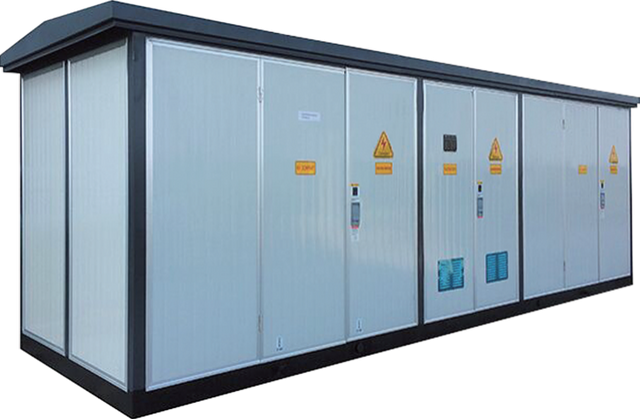
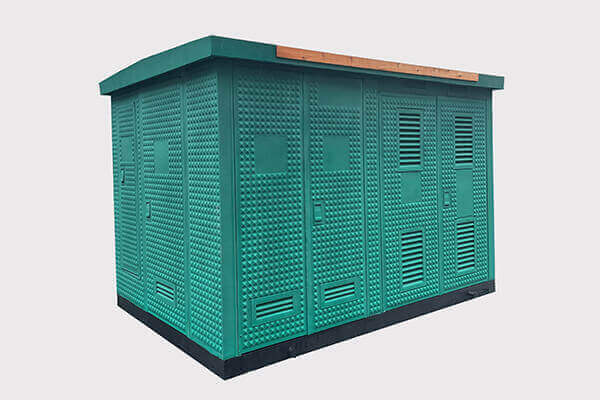
Where a compact or prefabricated approach suits the site, it can simplify some interfaces by bringing major components into a coordinated enclosure. 4E’s prefabricated transformer product describes separate functional areas for high-voltage distribution, the transformer, and low-voltage distribution. A project team should verify all site-specific electrical, fire, access, environmental, and utility requirements before deciding that a compact solution is suitable.
Monitoring should serve an operating decision. Temperature, load, alarms, switching status, and other signals can be valuable if they reach someone who knows what to do. Avoid collecting data without alarm priorities, response procedures, and maintenance ownership. For critical facilities, monitoring and condition management can reduce surprise outages when tied to a clear operating plan.
Create a controlled specification that records the project’s electrical and installation requirements. Include the rating, voltages, frequency, connection arrangement, impedance, taps, insulation or cooling type, losses, ambient conditions, altitude where relevant, enclosure, indoor location, noise requirement, terminal interfaces, protection, monitoring, test documentation, accessories, standards, packing, transport constraints, and commissioning support.
Include room drawings and the single-line diagram. State the desired maintenance access, cable-entry route, lifting constraints, foundation requirements, ventilation assumptions, fire strategy, drainage or containment provisions when applicable, and required documentation. Ask suppliers to list exclusions and assumptions. This turns a generic quote into a comparison of complete solutions.
Use factory and site acceptance activities to verify the delivered configuration. On site, confirm nameplates, physical condition, accessories, connection arrangements, grounding, protective settings, room condition, ventilation, and approved energization steps. Record deviations and close them before routine operation. 4E’s transformer range can support early product discussions, while the final project decision should always follow the approved electrical design.
For an indoor substation, the best transformer choice is the one that fits a complete building-and-power-system design. Dry type and oil immersed transformer solutions each have valid applications, but the selection must be grounded in fire strategy, ventilation, room layout, load duty, protection, maintenance, and lifecycle value. Use a documented comparison, confirm the local requirements, and specify the interfaces early. That approach avoids a false binary and produces an installation that operators can maintain safely over its service life.
No. The suitable type depends on the building risk assessment, local requirements, transformer duty, room design, protection, maintenance plan, and owner preferences. Both options require an engineered installation.
Its indoor installation must address the relevant liquid-related, fire, containment or drainage, protection, and maintenance considerations. The exact provisions depend on the unit, site, and applicable regulations.
Maintenance needs depend on the specific design, environment, loading, and manufacturer instructions. Do not select solely from a claim of low maintenance; review the planned inspection and service tasks for the actual installation.
Non-linear loads can increase thermal stress and influence voltage quality. Assess the load spectrum and coordinate the transformer choice with the power-quality and distribution design.
Include transformer footprint, clearances, ventilation paths, switchgear access, cable routes, grounding, fire measures, lighting, drainage or containment where applicable, safe working space, and a route for installation and replacement.
It may be possible when the product configuration and building conditions are suitable, but the project must verify dimensions, ventilation, fire strategy, electrical interfaces, access, and all applicable codes before approval.