Views: 0 Author: Site Editor Publish Time: 2026-09-23 Origin: Site
Evolving grid demands now push legacy distribution networks far beyond their original design tolerances. The rapid adoption of distributed energy resources and electric vehicle charging infrastructure creates unprecedented volatility. Utilities and facility managers face a difficult commercial choice. They can pursue capital-intensive line upgrades, such as full reconductoring. Alternatively, they can deploy localized equipment interventions to maintain strict ANSI C84.1 compliance.
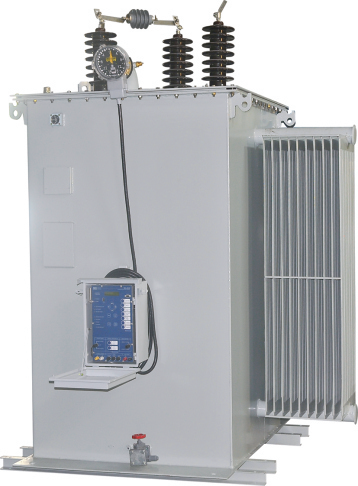
A step voltage regulator offers a precise, cost-viable intervention for targeted stabilization. This approach stands distinct from broader, less granular substation-level controls. In this article, you will learn exactly when and why to deploy these devices. We will cover technical triggers, operational benefits, and how they compare to alternative interventions. You will discover how a well-placed step voltage regulator for distribution system networks resolves downstream power quality issues effectively and efficiently.
Step voltage regulators are the most viable commercial choice when voltage degradation occurs far from the substation on long radial feeders.
Unlike capacitor banks that manage reactive power, SVRs directly alter the voltage magnitude, making them the superior voltage fluctuation solution for active, shifting loads.
Modern procurement must prioritize controller intelligence (bidirectional power flow capability) over basic mechanical reliability due to distributed solar/wind integration.
The primary implementation risk remains the mechanical wear of the tap changer; maintenance cycles must be factored into long-term operational planning.
You must first identify when voltage levels consistently drop below acceptable limits. Most regulatory frameworks require utilities to maintain delivery within ±5% of nominal voltage. Severe degradation often occurs at the very end of a long line. Diagnosing this early remains critical for effective distribution voltage control. When downstream nodes report chronic undervoltage, you need targeted interventions.
Substation Load Tap Changers (LTCs) offer centralized regulation. They adjust the overall voltage for an entire feeder line. However, they cannot fix localized issues deep within highly branched circuits. If one branch experiences heavy load while another remains light, a centralized LTC cannot satisfy both. It represents a blunt instrument. Boosting the substation voltage might fix the heavy branch but cause damaging overvoltage on the lighter branch.
This operational reality establishes a clear business case. Poor power quality leads to financial penalties. Customers experience equipment damage and file costly liability claims. You must avoid these outcomes to protect your operational budget. Targeted regulators allow you to defer massive capital expenditures. You avoid expanding the grid or installing thicker conductors prematurely. The equipment pays for itself by mitigating risk and delaying heavy infrastructure investments.
Physics dictates the business reality of power distribution. Line impedance causes severe voltage drop over long distances. The further power travels, the more voltage is lost to resistance and reactance. You cannot simply push higher voltage from the substation without endangering close-proximity customers.
Installing regulators mid-line or near the load restores optimal delivery. This targeted approach circumvents the need to replace miles of conductor. You save millions in capital expenditure. The regulator monitors the incoming degraded voltage and steps it back up to nominal levels. It acts as a crucial booster station along rural or extended distribution lines.
Modern grids deal with reverse power flow daily. Localized solar arrays or wind farms generate power directly onto distribution lines. This causes unpredictable voltage swells during peak generation hours. Traditional grids were not built to push power backward.
Modern regulators solve this modern problem. They feature bidirectional controllers. They actively step down excess voltage during peak solar generation. Later in the evening, when solar output drops and residential load spikes, they reverse operation. They step up the voltage to support the peak load. You cannot manage high DER penetration safely without this localized intelligence.
Industrial facilities heavily impact grid stability. Large motor starts, mining operations, or localized manufacturing plants draw transient high currents. This sudden inrush current causes immediate voltage sags across the local grid. Nearby commercial and residential customers suffer from flickering lights or tripped electronics.
Step regulators provide rapid ±10% voltage correction. They sense the drop caused by industrial machinery and adjust their tap positions accordingly. This isolates the disruptive industrial load from the broader grid. You protect sensitive downstream customers while fully supporting necessary industrial operations.
Engineers often confuse the roles of capacitors and regulators. You must clarify this technical boundary. Capacitor banks inject reactive power (vars) into the system. This improves the overall power factor. Improved power factor indirectly boosts voltage by reducing line losses.
However, capacitors fail when the power factor is already high but voltage remains low. Regulators utilize an autotransformer equipped with a mechanical tap-changing mechanism. They directly adjust the voltage magnitude regardless of the system's power factor. They solve voltage issues directly, rather than relying on reactive power manipulation.
Upgrading wire gauge permanently solves line impedance. Thicker wires carry more current with less voltage drop. However, reconductoring requires massive capital expenditure. You face environmental impact studies, right-of-way approvals, and extended labor costs. It takes years to complete.
Regulators offer a faster, modular alternative. They blend operational and capital expenditures efficiently. You can deploy a unit in weeks rather than years. If network loads shift in the future, you can relocate the device to a new trouble spot. Reconductored lines offer no such flexibility.
Adding regulators downstream provides granular, targeted control. Substations adjust all three phases simultaneously. If only one phase experiences heavy load, a substation upgrade will overcompensate the other two phases.
Downstream regulators operate independently. Often, deploying a single-phase automatic voltage regulator handles asymmetric loads perfectly. You fix the specific problem phase without disrupting balanced phases. This scalability makes downstream deployment vastly superior to blunt substation-level adjustments.
Comparison of Voltage Regulation Interventions
Intervention Type | Primary Mechanism | Upfront Cost | Deployment Speed | Granularity |
|---|---|---|---|---|
Step Voltage Regulator | Direct tap change via autotransformer | Moderate | Fast (Weeks) | High (Single-phase capable) |
Shunt Capacitor Bank | Reactive power injection | Low | Fast (Weeks) | Low (Depends on power factor) |
Line Reconductoring | Reduced line impedance | Very High | Slow (Years) | System-wide |
Substation LTC Upgrade | Centralized transformer regulation | High | Moderate (Months) | Low (Three-phase blunt adjustment) |
The brain of the regulator matters more than the iron. You must assess communications protocols carefully. Devices must support DNP3 or IEC 61850 standards. These protocols ensure secure data transmission back to utility control centers.
The controller must support remote monitoring and automated data logging. It must integrate seamlessly into modern Advanced Distribution Management Systems (ADMS). Operators need real-time visibility into tap positions and voltage levels. Without SCADA integration, you fly blind during critical grid events.
You must evaluate standard specification ranges. The industry standard utilizes 32 distinct steps. These consist of 16 raise steps and 16 lower steps. Each step represents 5/8% of the nominal voltage. This provides a total regulation range of ±10%.
Proper configuration is paramount. You must discuss and set appropriate time delays and bandwidth parameters. If the bandwidth is too tight, the device will suffer from "hunting." Hunting occurs when the regulator constantly changes taps for minor, fleeting voltage swings. This destroys the mechanical contacts rapidly.
Never compromise on baseline trust metrics. All deployed equipment must meet IEEE C57.15 standards. This rigorous framework dictates thermal limits, dielectric strength, and mechanical durability. It ensures the device survives harsh outdoor conditions safely.
For specific rural deployments, verify adherence to USDA Rural Development (RUS) guidelines. RUS certification proves field durability. It also ensures the utility remains eligible for federal funding and low-interest infrastructure loans. Non-compliant equipment introduces both safety risks and severe financial liabilities.
You must analyze installation constraints before procurement. Pole-mounted regulators face strict weight limitations. Utility poles can only support so much iron and oil before buckling under wind loads. Pad-mounted regulators require civil engineering and concrete foundations. You also must secure land easements from property owners for pad-mounted units.
Assess mechanical wear and failure points honestly. A load tap changer remains a fundamentally mechanical device. Its internal contacts suffer from arcing every time they switch positions under load. You must factor in the expected lifespan of these contacts. Modern units are often rated for hundreds of thousands of operations. However, heavy load switching accelerates contact erosion.
Evaluate dielectric fluid management protocols carefully. Oil-filled units require periodic dissolved gas analysis (DGA). This testing detects internal arcing or paper degradation. You also face environmental responsibilities regarding leak containment. Dry-type alternatives eliminate oil leaks but carry higher upfront costs. You must weigh this initial expense against the ongoing maintenance labor required by traditional oil-filled models.
Step voltage regulators remain the definitive choice when grid topology or localized volatility renders centralized voltage control ineffective. They offer the necessary precision to handle long radial feeders and modern distributed generation sources. By understanding the core triggers and comparing alternatives, you ensure reliable power delivery for all downstream customers.
Take these immediate next steps to optimize your grid architecture:
Execute detailed load flow simulations to map exact voltage drop locations.
Conduct power quality audits to measure current reverse power flow from local DERs.
Calculate necessary bandwidth and time delay settings to prevent mechanical hunting.
Draft an RFP requiring strict IEEE C57.15 compliance and bidirectional controller capabilities.
A: No. An automatic voltage regulator (AVR) is a broad term that applies to many systems, including generators or small electronic devices. A step voltage regulator is a specific, heavy-duty type of AVR used in utility distribution. It utilizes an autotransformer and a mechanical tap changer to regulate line voltage in discrete steps.
A: Modern contacts typically withstand 1 million to 2 million mechanical operations under normal conditions. However, heavy electrical loads or frequent fault currents can accelerate contact degradation. You should perform oil testing and internal inspections every 3 to 5 years to ensure reliable operation.
A: Yes, but only if they are equipped with a modern, microprocessor-based bidirectional controller. This controller must sense the current direction accurately. It then switches its reference voltage from the load side to the source side to step down excess voltage generated by the solar farm.