Views: 0 Author: Site Editor Publish Time: 2026-06-29 Origin: Site
A buried cable route may look protected, but underground conditions can be far less stable than they appear. Groundwater, flooded ducts, wet trenches, condensation, and minor sheath damage can expose power cables to moisture for years, increasing the risk of insulation aging and hidden faults. Moisture-related degradation, including water treeing in polymeric cable insulation, is a recognized long-term reliability concern for power systems.
Waterproof Power Cables help reduce these risks by limiting water ingress and moisture migration. Choosing the right design can protect safety, reliability, and lifecycle cost in underground installations.
Underground cable routes can stay wet long after the surface has dried. A high water table may keep direct-burial cables surrounded by damp soil, while heavy rain can fill cable trenches, manholes, or duct banks. Even enclosed conduits are not automatically safe, because water can enter through openings, poor sealing, or damaged sections and remain trapped inside for extended periods.
Moisture problems often begin with a small defect. Radial water ingress occurs when water penetrates inward through cracks, punctures, sheath cuts, or degraded outer layers. A cable may still look serviceable from the outside, but one damaged section can allow moisture to reach insulation screens, metallic components, or other sensitive layers.
Longitudinal water movement creates a wider risk. After water enters at one point, it can travel along the cable length if the cable does not include suitable water-blocking materials. That means a local sheath injury, poor joint, or unsealed cable end can create a problem beyond the original entry point. For this reason, underground cable design must consider both water entry and water migration.
Water-related damage does not always cause an immediate outage. Insulation degradation, corrosion of metallic parts, leakage current, reduced dielectric strength, and partial discharge risks may develop gradually. By the time a fault becomes visible, the cable system may already require difficult testing, fault location, excavation, or replacement.
XLPE insulation is widely valued for power cable applications, but it still needs protection from long-term moisture stress. Water treeing is a known aging phenomenon in polymeric insulation, where moisture and electrical stress can contribute to tree-like degradation paths over time. Waterproof construction helps reduce this risk by limiting the moisture conditions that allow such aging mechanisms to develop.
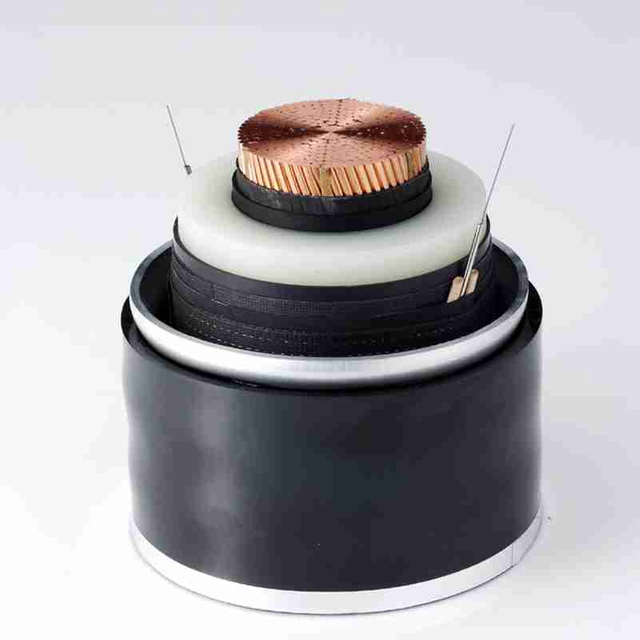
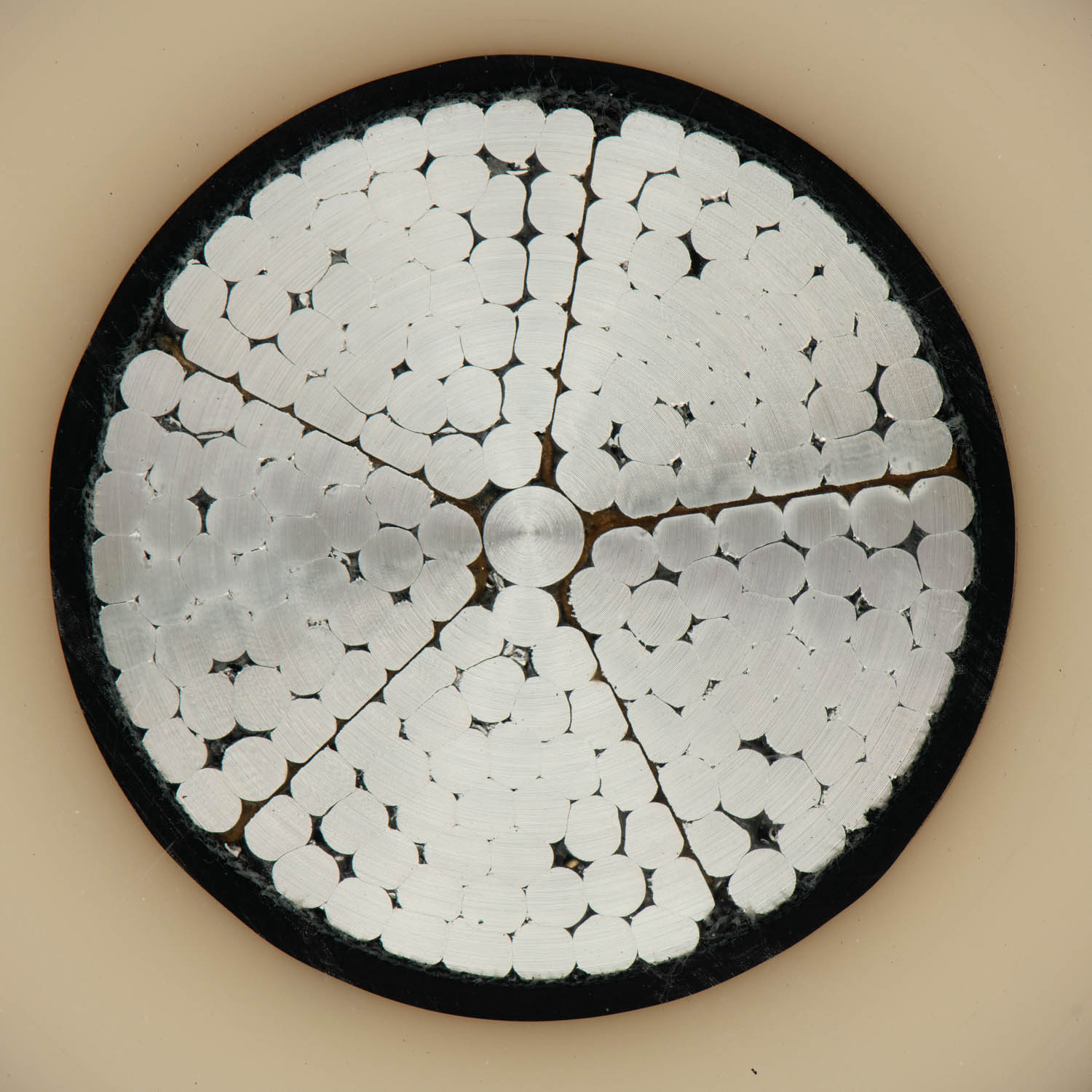
A reliable underground waterproof cable depends on the entire structure, not only the thickness of the outer jacket. The conductor carries current, while XLPE insulation provides electrical strength and thermal stability. Around the insulation, metallic screens or sheaths help control electrical stress and support safe system operation. Inner and outer sheaths protect against environmental exposure, while optional armor can improve resistance to soil pressure, rodents, impact, and accidental digging damage.
The water-blocking layer is especially important in wet underground routes. A strong outer sheath helps keep moisture out, but internal water-blocking materials help control damage if water enters through a breach or joint. Without this internal protection, water may continue to spread along the cable length. True underground waterproof performance comes from the way these layers work together.
Cable Layer or Feature | Main Function Underground | Why It Matters in Wet Routes |
Conductor | Carries electrical current through the route | Copper and aluminum options help balance conductivity, weight, and project cost |
XLPE insulation | Provides electrical strength and thermal stability | Helps support high-voltage performance under continuous operating stress |
Metallic screen or sheath | Controls electrical stress and supports system protection | Adds stability around the insulation system in demanding routes |
Inner and outer sheath | Protects against soil moisture, chemicals, and external exposure | Forms the first environmental barrier against underground conditions |
Longitudinal water-blocking layer | Limits water movement along the cable length | Helps keep a local breach from becoming a wider cable-system problem |
Optional armor | Adds mechanical protection | Useful where soil pressure, rodents, impact, or accidental digging may damage the cable |
Radial water protection helps stop moisture from entering inward through the cable wall. This may involve moisture-resistant sheaths, metallic barriers, laminated layers, or other construction choices that protect the insulation system from external water. Longitudinal water protection has a different role: it helps prevent water from traveling along the cable once it has entered.
Common water-blocking methods include swellable tapes, gels, powders, yarns, and other materials that expand or resist moisture movement. These features are especially useful in wetlands, river-crossing sections, duct installations that may flood, and high-water-table areas. Basic moisture resistance may be enough for some controlled environments, but underground power routes often need stronger protection because faults are harder to access and more expensive to repair.
4E’s 76kV XLPE Insulated Waterproof Power Cable is a relevant example of high-voltage Waterproof Power Cables intended for demanding power transmission environments. The cable is available with copper or aluminum conductor options, XLPE insulation, corrugated aluminum sheath structures, PVC or PE sheath versions, and longitudinal water-resistant configurations. Its underground use cases include direct burial or duct installation in wetlands, river crossings, and high-water-table regions.
Underground cable failures are rarely simple maintenance events. Fault locating takes time, and the affected section may be under soil, pavement, concrete, ducts, or facility infrastructure. Excavation can interrupt site operations, create safety risks, and require coordination with civil works, utility teams, or facility managers. Even after the cable is exposed, replacement or joint repair can be labor-intensive.
Waterproof Power Cables help reduce these risks by addressing moisture before it becomes a fault trigger. Limiting water ingress protects insulation, metallic screens, and conductor systems from conditions that accelerate aging or failure. The lifecycle value is especially clear in routes where access is limited, because preventing a failure is usually more economical than finding and repairing one after service is interrupted.
Moisture-damaged power cables can create safety hazards as well as operational problems. Water inside or around vulnerable cable components may contribute to short circuits, overheating, electrical arcing, shock hazards, and damage to connected equipment. In high-voltage or high-load installations, these risks can affect not only the cable itself but also transformers, switchgear, protection systems, and downstream operations.
Facilities with wet or flood-prone routes need cable systems that support stable energy distribution under realistic site conditions. Industrial plants, utility substations, commercial campuses, metro and tunnel systems, renewable energy farms, and underground distribution networks all depend on predictable power delivery. Waterproof Power Cables provide an added layer of reliability where moisture exposure is likely and service interruption would be costly.
Cable selection should begin with the route, not the catalog name. A direct-burial route in ordinary soil may require a different sheath, armor, and water-blocking structure than a duct installation that floods after storms. Wetlands and river-crossing sections need stronger resistance to prolonged moisture exposure, while industrial sites may add chemical exposure, vibration, or mechanical stress to the design requirements.
Voltage rating alone does not determine whether a cable is suitable for underground wet service. Buyers should evaluate rated voltage, current-carrying capacity, XLPE insulation performance, conductor material, metallic screen or sheath design, armor needs, and the suitability of PE, PVC, or halogen-free sheath materials. Soil condition, operating temperature, installation depth, and possible flooding should also be part of the specification review.
A compact selection checklist can help prevent costly mistakes:
● Is the route direct burial, duct, tunnel, or underwater-adjacent?
● Is flooding occasional, seasonal, or continuous?
● Does the cable need longitudinal water blocking?
● Is radial water protection required against sheath damage?
● Should armor be used for soil pressure, rodents, or digging risk?
● Are joints and terminations rated for wet underground conditions?
● Does the sheath material match soil, chemical, UV, and fire-safety needs?
● Is the cable approved for the intended installation method?
Outdoor-rated does not always mean underground-rated. 4E’s ABC Overhead Power Cable is designed for aerial bundled distribution with XLPE or PE insulation and UV-stabilized materials for overhead environments. It belongs to overhead service rather than buried installation, even when a conduit is present.
That distinction is important for procurement and engineering teams. A cable can resist sunlight, wind, and general outdoor exposure while still lacking the sheath structure, water-blocking design, and mechanical protection required for buried service. Substituting an overhead cable for underground installation may reduce upfront cost, but it can create long-term reliability and safety risks. Waterproof Power Cables should be selected for the installation environment they are meant to serve, not only for voltage or outdoor durability.
Many underground water problems begin at connection points rather than through the cable body. Joints, terminations, and cable ends are vulnerable because they interrupt the factory-built cable structure. If sealing is poor, water can enter during storage, installation, flooding, or long-term operation.
Compatible waterproof joints should be selected for the cable type and voltage class. Cable ends should be sealed during storage and before installation, especially on wet sites. Installers should avoid leaving cut ends exposed in trenches or ducts, and termination workmanship should be checked before energizing. A strong cable can still perform poorly if the accessories do not match the same waterproofing standard.
Waterproof layers can be compromised during installation. Excessive pulling tension may damage the sheath or internal layers, while sharp bends can stress insulation and screens. Abrasion during duct pulling, rough backfill, accidental cuts, and impact from tools or stones may create entry points for water.
Installation guidance should be followed carefully, including bending radius limits. For a 76kV waterproof XLPE cable of this type, the typical minimum bending radius may differ between unarmored and armored structures, so installers should confirm the required handling limits before pulling or backfilling. These details are not minor handling notes; they help preserve the cable structure that makes underground waterproof performance possible.
A waterproof cable system should still be supported by good site practice. Duct routes, cable pits, and trenches should be inspected after heavy rain, especially in areas with repeated flooding. Drainage should be maintained where practical, and site teams should document route sections that experience standing water.
Underground cable routes face moisture risks that are easy to overlook, from groundwater and flooded ducts to damaged sheaths and poorly sealed joints. Choosing Waterproof Power Cables with suitable insulation, sheath materials, water-blocking design, and mechanical protection helps reduce hidden faults, improve safety, and support more reliable power distribution over time.
East Energy Electrical Engineering Co., Ltd. provides waterproof XLPE power cable options for demanding underground applications where moisture resistance and stable transmission matter. For projects involving wet soil, ducts, or high-water-table routes, matching cable construction to site conditions is the practical step that protects long-term performance.
A: Yes, but only if the cable is rated for direct burial or the specified underground method. Wet-location cable and direct-burial cable are not always interchangeable.
A: Water can corrode metallic parts, weaken insulation, reduce dielectric strength, and increase the risk of short circuits or hidden faults in buried electrical systems.
A: Water-resistant cables tolerate moisture exposure, while waterproof cable designs are built for more demanding wet conditions, often using stronger sheaths and water-blocking layers.
A: Not always. Some direct-burial cables are designed for soil and moisture exposure, while other cable types require conduit or additional mechanical protection.
A: Check voltage rating, installation method, soil moisture, flooding risk, sheath material, armor needs, and whether radial or longitudinal water blocking is required.
A: No. Outdoor weather resistance does not automatically mean burial suitability. Underground routes require cable construction designed for soil contact, moisture, and mechanical stress.